The Lighthouse Method
You do not need to light the house. You need a few reliable points so your feet know where the furniture ends, where the doorway is, and where the next step begins. That is the Lighthouse Method. Ships do not light the ocean. They use beacons. The same idea works at 2:00 a.m. between the bed and the bathroom. Start with a 4-pack of Glowsters. Add more only where your own house actually bites you.
Nightstand water glass (or medication).
Put one Glowster under the glass or right beside it. When you sit up, the first thing your eyes find is the thing you came for. No hunting. No lamp.
Bed corner or nightstand edge.
The second marker goes on the corner of the bed or the outer edge of the nightstand. That is the “rock.” It tells you where the bed stops so you do not walk into the bedpost on the way out or the way back. Two markers. That is the whole bedroom system for most people. If you keep a phone, flashlight, or glasses on the nightstand, the same Glowster that marks the glass also marks those.
Hallway — the path, not the room
Chair, table, or anything that lives in the traffic lane. If a chair, bench, or console table sits along the route, put a Glowster on the corner that sticks out. You do not need to see the whole chair. You need to see the corner before your shin finds it.
Door jambs along the route.
A Glowster at the bathroom door jamb (or the hallway corner that leads to it) is the next lighthouse. It is the “you are here / turn here” mark. Keep the chain short. Two or three markers between bed and bathroom is usually enough. More is not better. More is just more things to bump into in the dark while you are placing them.
Bathroom — destination markers, not a nightlight
Bathroom door jamb. Already mentioned, but it belongs to both hallway and bathroom. It is the entrance beacon.
Toilet-paper holder. This is the one people laugh at until they use it. A Glowster on or just below the holder (or on the tank if that is easier) tells you exactly where the fixture is. You can find it without flipping the switch and without a long, sleepy search.
Optional: one more near the sink if you actually use the sink at night. Skip it if you do not. The bathroom does not need to be lit. It needs two or three points so you can do what you came to do and leave.
Stairs — if your house has them
Stair nosing, or the first and last tread. Do not try to mark every step. Mark the beginning of the flight and the end of the flight. A Glowster on the first nosing (or tucked against the side of that tread) tells you the stairs start. Another at the landing or last step tells you they end. If a handrail newel post is easier to mark than the tread itself, use that. The job is the same: “stairs begin here” and “stairs end here.” This is fall-prevention, not decoration. Place them, live with them for a night, and move them if your foot still guesses wrong.
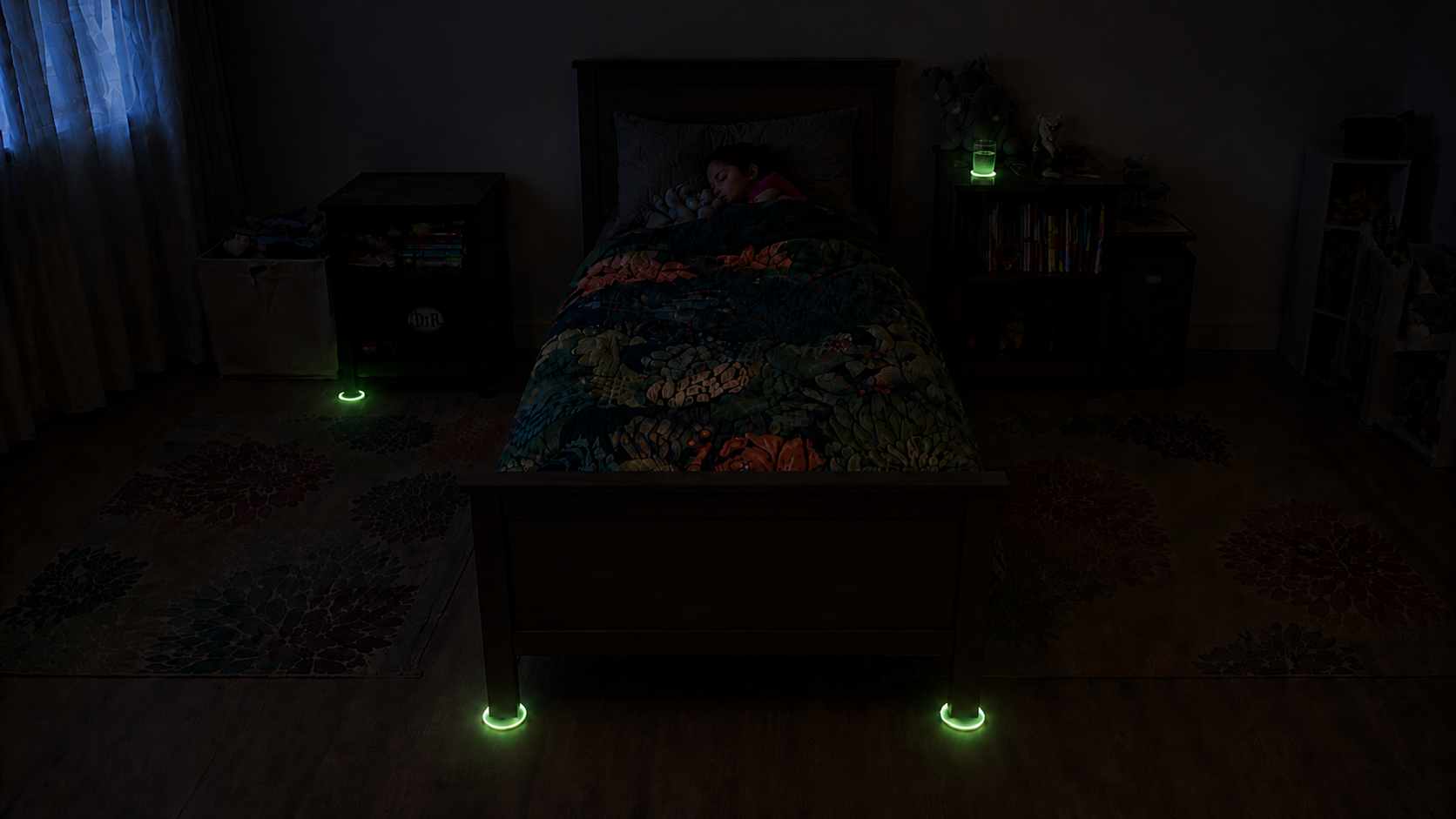


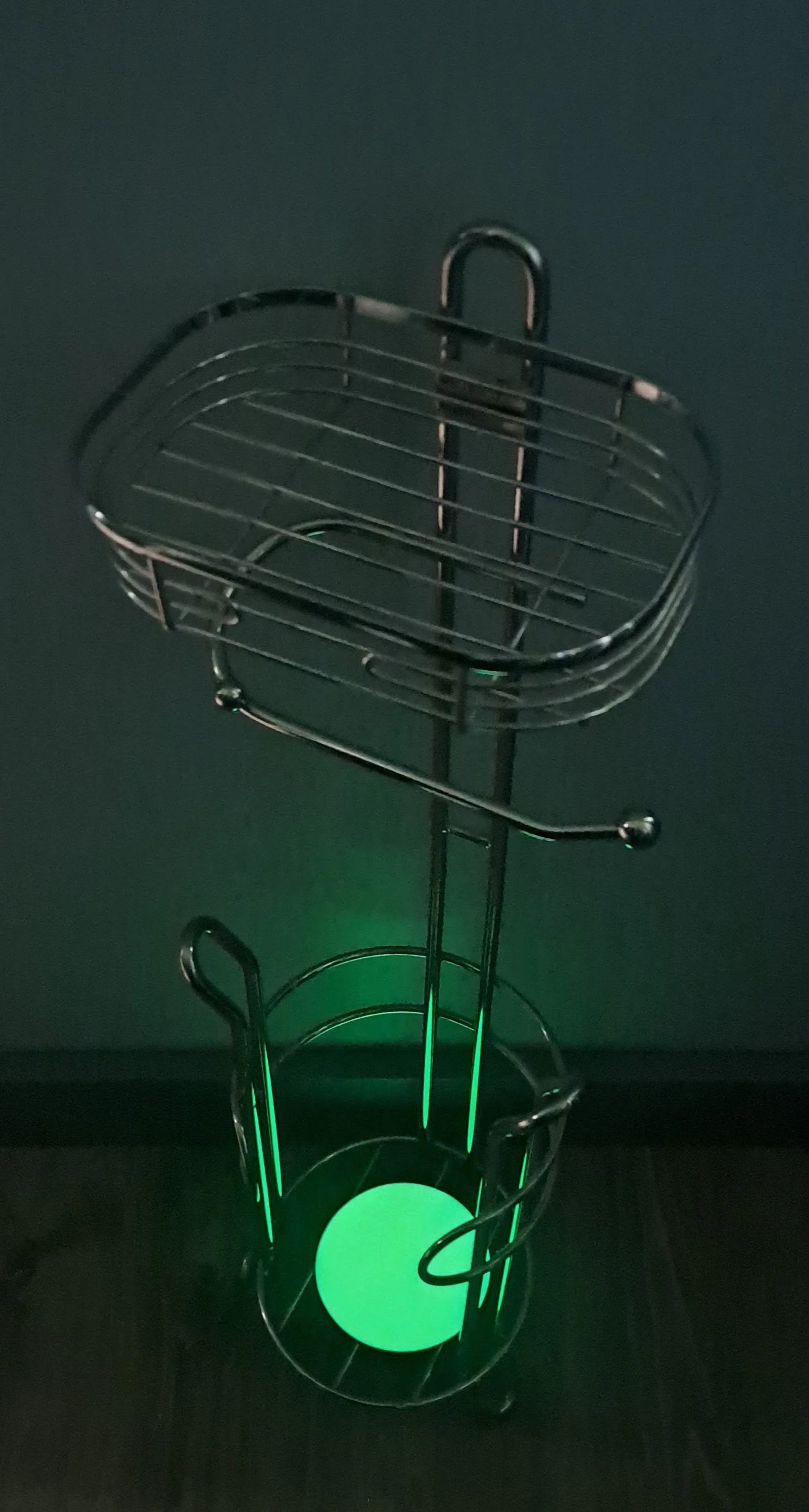


A working map for a one-story house
A common first setup looks like this:
Nightstand — under the water glass
Bed corner
Hallway chair or table corner (only if something is actually in the way)
Bathroom door jamb
Toilet-paper holder
That is five points. Many houses need only four. Start smaller than you think. Add the fifth only after the first night tells you where you still hesitated. Two-story house: add the two stair markers. Kids’ room: add one at that doorway so the path has a clear end.
How to place them so they actually work
Charge them in ordinary room light during the day. Fifteen minutes of decent light is enough for a strong first glow; they keep a usable glow for hours after that. Place them on the first night while the lights are still on, then turn the lights off and walk the route once. If a marker is too low, too far inside a shadow, or behind something, move it. The map is yours. The house will tell you if a beacon is in the wrong spot. Glowsters double as coasters and furniture pads in daylight. Leave them where they live. You should not have to set up a system every evening.
What this is not
It is not a nightlight in every room.
It is not enough light to read by.
It is not a substitute for a real lamp when you actually need one.
It is a string of small green points that say: bed ends here, turn here, door here, fixture here, stairs here.
Just enough light, throughout the night, exactly where your feet need a hint.
— The Sandman
Shop Glowsters and key fobs at slumberlights.com
