The Lighthouse Method
And the Slumberlights Nighttime Navigation System
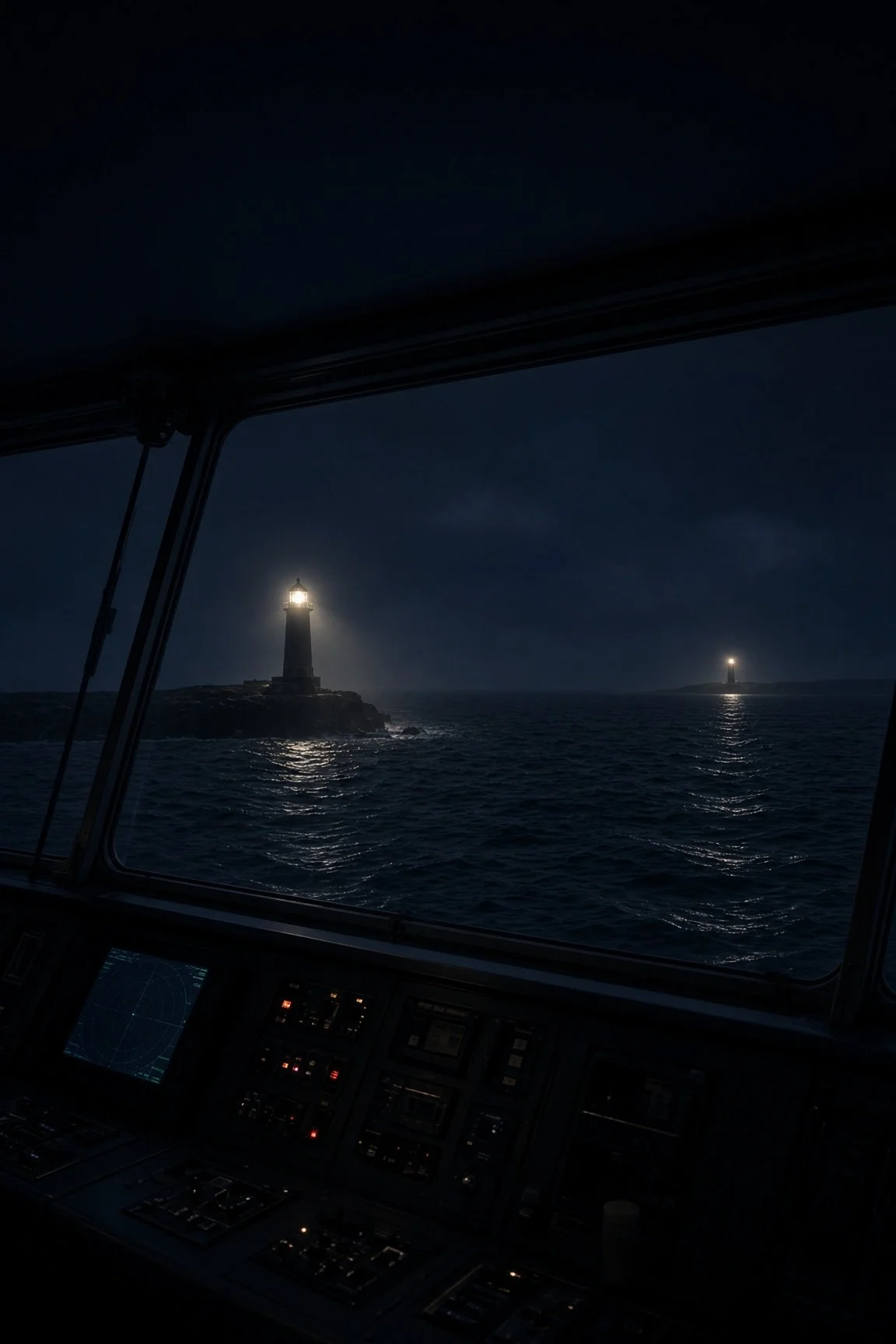
The Slumberlights Nighttime Navigation System: The Lighthouse Method for Safe, Sleep-Friendly Movement
When you wake in the middle of the night—whether for the bathroom, a child’s call, or to investigate a noise—the last thing you want is bright light that jolts your system awake, disrupts your partner or kids, or leaves you fumbling blindly into furniture. Traditional nightlights and overhead lights solve one problem by creating another: they flood spaces with light that triggers the waking response and can suppress melatonin.
Slumberlights takes a different approach. Inspired by how ships navigate foggy coasts, the lighthouse method uses small, purposeful glowing markers as beacons. You don’t need to light the entire room. You only need to know where the obstacles and safe paths are. Place multiple Glowsters (glow-in-the-dark safety coasters), key fobs, or markers at strategic points, and you create a simple, reliable guidance system that works all night without electricity, batteries, or blue-rich light.
How the Lighthouse Method Works
Photoluminescent Glowsters charge quickly from ambient room light or a brief flashlight charge (as little as 15 minutes for strong initial glow) and then emit a soft, visible glow for 10+ hours. They mark locations rather than illuminate large areas. Your eyes and brain do the rest: the glow tells you “obstacle here,” “doorway here,” or “path this way.”
This is the opposite of conventional night lighting. Instead of trying to see everything, you orient to a few reliable points—exactly as a sailor uses a lighthouse to avoid rocks without needing daylight across the whole ocean.
Typical multi-product setup for common nighttime needs:
Bedside / starting and ending point: One Glowster under or next to your water glass or medication. Another on the corner of the bed or nightstand edge so you know exactly where the bed ends.
Path and obstacles: Glowsters at table legs, chair corners, door thresholds, or baseboard points along the route. These act as “rocks” markers—you see them in time to step around.
Bathroom: One at the bathroom doorway, one near the toilet or toilet-paper holder, and optionally one by the sink. You can find the destination and key fixtures without turning on the light.
Kids’ rooms or hallway: A short chain of markers creating a path from your bed to the child’s door or hallway junction. Travelights or Glowsters set the route so you move quietly and confidently.
Keys, phone, or emergency items: A glow-in-the-dark key fob on your keys or important items so you can locate them instantly if needed.
Pets or other variables: Dog tags or additional markers help avoid stepping on animals or toys.
In a typical home, 4–8 well-placed Glowsters create a complete navigation system. They double as ordinary coasters during the day, so they blend into normal life.
Advantages of the Lighthouse Approach
1. Preserves sleep for everyone Soft, localized glow is far less likely to fully awaken you or anyone else in the house. Bright overhead or plug-in nightlights suppress melatonin and signal “daytime” to the brain. Lighthouse markers give just enough visual information without that disruption. This is especially valuable for parents of young children, partners with different sleep schedules, or anyone sensitive to light.
2. True obstacle avoidance without flood lighting You don’t need to see the entire floor. Seeing the glowing edge of a table leg or doorway is enough to step safely around it. This is more effective (and less jarring) than a single dim nightlight that leaves many hazards in shadow. Customers have described it exactly this way: enough light to know where the “rocks” are, without illuminating the whole room.
3. Works during power outages and anywhere No plugs, no batteries, no dependence on house electricity. Once charged by normal daytime or evening light, the markers keep working. Ideal for travel (hotel rooms), camping, or emergencies. A quick flashlight charge can refresh them if needed.
4. Flexible and low-cost system Start with a 4-pack of Glowsters and expand as needed. Move them when furniture changes or for different houses. Use key fobs for portable items. The same products serve bathroom runs, checking on kids, or locating something quickly if you hear an unusual sound at night.
5. Supports older adults and fall prevention Subtle markers on furniture edges and thresholds help with safe movement without the glare or sudden brightness that can disorient. The system prioritizes safety navigation for seniors and anyone concerned about trips or falls in the dark.
6. Quiet and non-intrusive No clicking switches, no sudden light change that startles. You simply follow the beacons. This keeps the house calm whether you’re tending to children, pets, or just making a quick bathroom trip.
Putting It into Practice
Charge the products during the day by leaving them in normal light (or give them a short flashlight boost). Place them deliberately the first night: start at the bed and mark the path and hazards you actually encounter. Adjust over a night or two until the route feels automatic. Many people find that after a short period the markers become part of their mental map of the dark house.
The result is simple: wake up, orient to the nearest glow, follow the chain of beacons to your destination, and return the same way—all without flipping a light switch or risking a stubbed toe. Just enough light, throughout the night, exactly where it helps.
Slumberlights products (Glowster coasters, key fobs, and related markers) turn ordinary rooms into navigable spaces while protecting the sleep environment that traditional lights often undermine. Explore the current lineup at slumberlights.com to build your own lighthouse system.